
The Eritrean Independence Bloc was Formed
In June of 1949
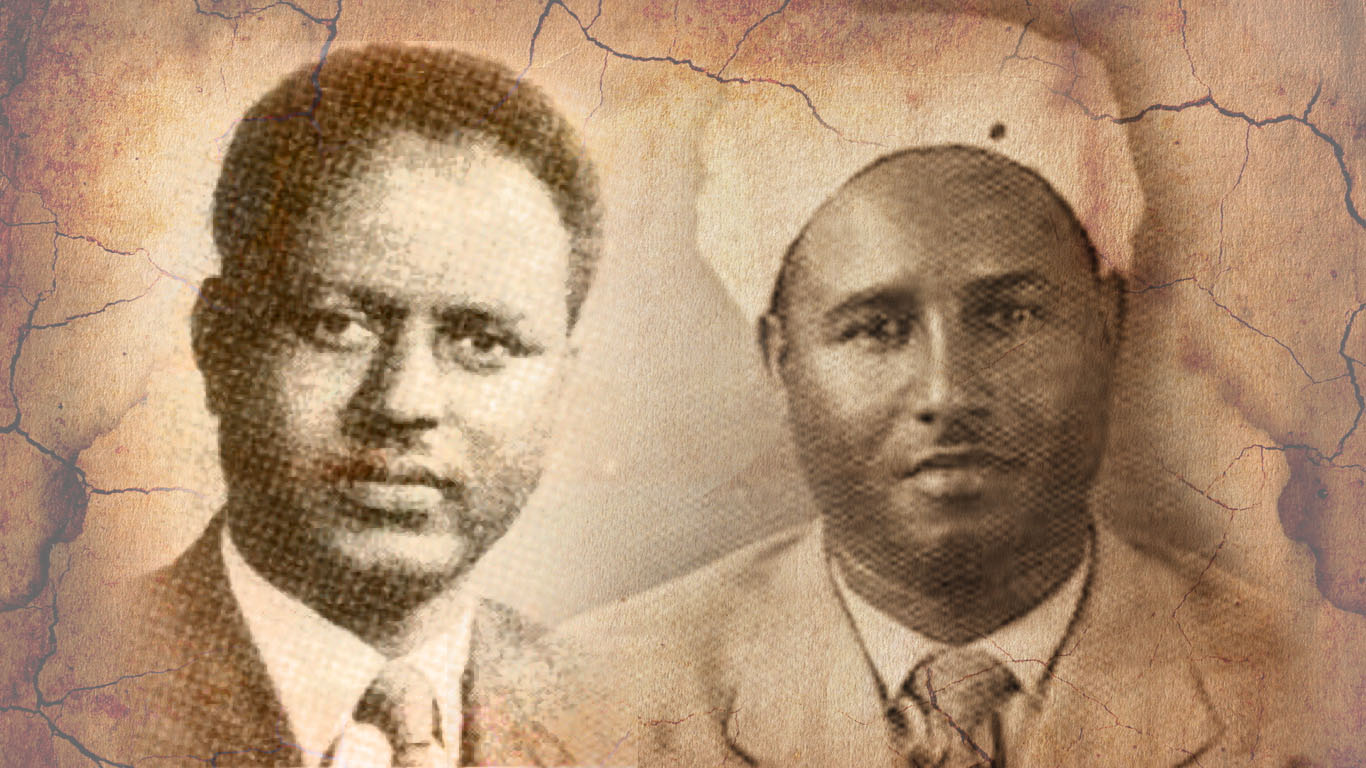 Prominent leader of the Independence Bloc, Woldeab Woldemariam and Ibrahim Sultan
In June 1949, the principal Eritrean parties opposed to annexation by Ethiopia joined together as the Independence Bloc. The coalition represented an estimated 70 to 80 percent of the Eritrean population. Its founding was a direct response to the Unionist Party, which sought outright incorporation of Eritrea into the Ethiopian empire, and to international proposals — including the Bevin-Sforza Plan — that threatened to partition the territory without a popular mandate.
Composition
The bloc united parties across religious and regional lines, though the coalition was not without internal tensions.
The Moslem League, founded by Ibrahim Sultan in December 1946, was the largest force within the coalition. It represented primarily the Muslim lowland communities, whose fear of absorption into the Ethiopian Orthodox-aligned imperial system was acute. Sultan became the bloc's most prominent international advocate.
The Liberal Progressive Party (LPP), co-founded by Weldeab Woldemariam, brought highland Christian nationalists into the coalition. Weldeab's participation was politically significant: it demonstrated that opposition to annexation was not a sectarian position but cut across Eritrea's main communities.
Smaller pro-Italy and pro-Britain factions also joined, preferring trusteeship or continued British oversight over immediate integration with Ethiopia.
Platform
The bloc's demands were unambiguous:
- Immediate independence and the establishment of a sovereign, democratic Eritrean state
- Opposition to partition — any division of Eritrea between neighboring states was rejected outright
- Preservation of Eritrea's existing borders, as defined under Italian and British administration
- Self-determination, to be exercised through a formal international process, not imposed by outside powers
UN Advocacy
As the United Nations deliberated over Eritrea's future between 1948 and 1950, Ibrahim Sultan led delegations to New York to argue the bloc's case directly before the General Assembly. He presented petitions signed by hundreds of thousands of Eritreans and warned the UN that forcing Eritrea into an unwanted union with Ethiopia would produce armed conflict. The warning would prove accurate.
Dissolution
The bloc's unity did not survive the diplomatic outcome it had fought against. When the UN passed Resolution 390 A (V) in December 1950, federating Eritrea with Ethiopia under an autonomous framework, the coalition lost its central unifying purpose. Ethiopian pressure on Eritrean political figures intensified. Ideological fractures — including a separatist movement among some Beja communities in the western lowlands — widened the divisions. The bloc dissolved in the years that followed.
Historical Legacy
The Independence Bloc established that a majority of Eritreans, across religious and regional lines, opposed annexation. Its delegations to the United Nations created a documented international record of Eritrean political will. When the federation was systematically dismantled through the 1950s and its protections abolished by 1962, that record became part of the foundational argument for the armed independence movement that followed.
The Eritrean Liberation Front was founded in Cairo in 1961, drawing directly on the political legacy of those who had sought independence through peaceful means a decade earlier.