
The Massacre at She'eb
12 May, 1988
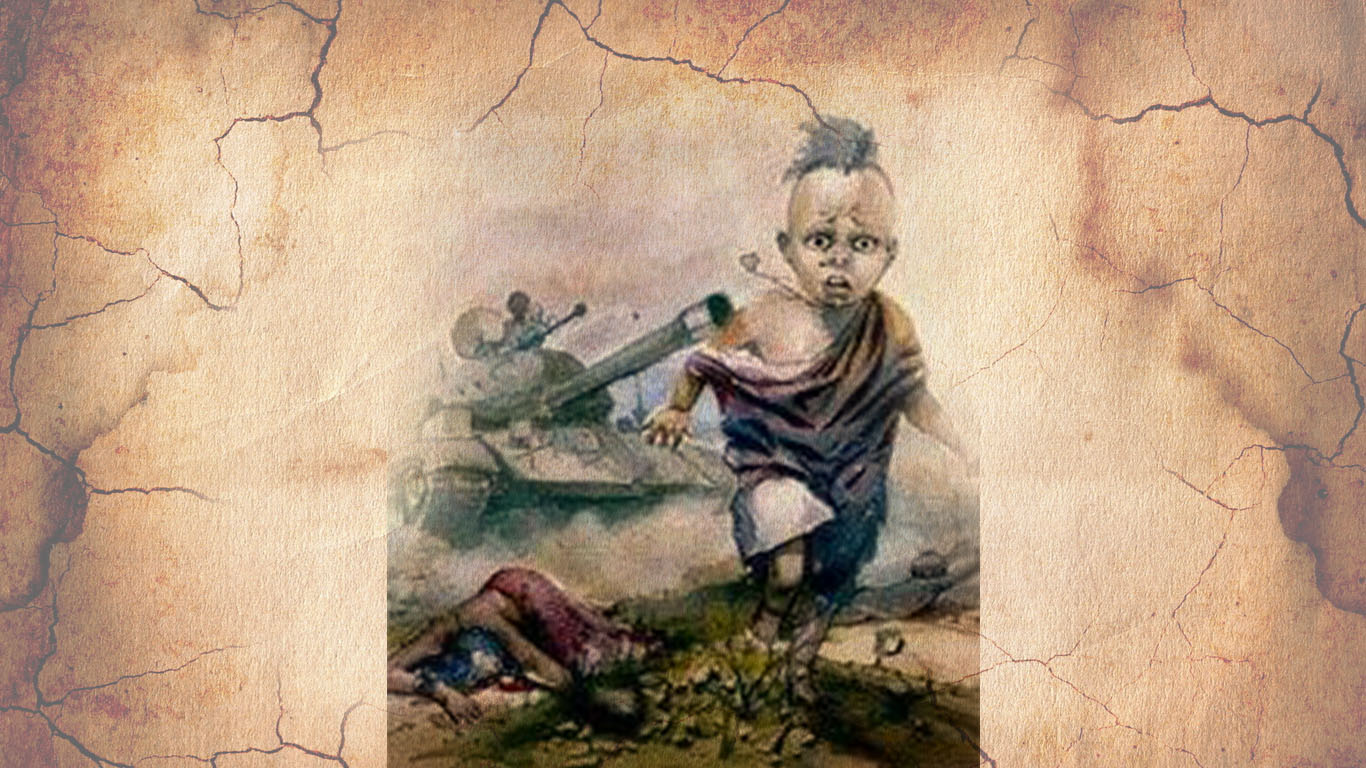 Massacre at She'eb
Since early morning on May 12, 1988, Ethiopian warplanes had been bombing EPLF positions across the area of Selomuna, May Ule, Shelab and Gersile. While the aerial bombardment continued, an Ethiopian infantry column took a separate route — entering through Edie-Eket, passing Ad-Gedbu, and bypassing the Debr-Tselim and Mensa'it caves — before descending into the Serobet valley below She'eb.
Once in the valley, the soldiers moved to seal off the Geeneb cave, cutting off the main escape route. Many residents of She'eb had already begun to flee at the sound of the approaching army. Among the soldiers were units of Wedo-Geba who wore EPLF-style garments and carried similar weapons. These were ex-EPLF freedom fighters who surrendered to the Ethiopian army and became collaborators. This may have confused some of those hiding into coming out. The soldiers forced those in hiding to gather in the valley. Some residents recognized the soldiers for what they were and attempted to flee. Others, confused by the appearance of fighters' clothing, complied.
Two groups formed. About 400 men, women and children gathered on the eastern side of the valley. A second group of roughly 200 assembled at a large tree near the center of the valley. Waiting among the crowd, people whispered to one another. Some hoped the army had gathered them for a meeting. Others recalled the fate of the 30 men of Shebah who had been killed without cause barely a month earlier when they had come out with their cattle as gifts to "greet" the approaching army.
At that moment, the EPLF air defence unit at May-Ule struck one of the bombing MiGs. The aircraft came down at Sheget-Dbed — in direct view of the soldiers encircling the two groups. This sight enraged the soldiers who drew their weapons and started attacking from every direction.
The army's tanks advanced through the valley from east to west. The first rolled through the 400 men gathered to the right. The second, advancing through the dust of the first, drove directly into the larger group near the center tree, striking the tree and toppling it before continuing through the crowd. The soldiers on foot opened fire on all sides. The valley filled with the sound of screaming, gunfire and tank engines.
When the tanks had finished their pass, the soldiers opened fire again into the crowd to kill those still alive. Those not crushed scattered in every direction.
Some survived by lying still among the dead and remaining motionless. The ground around them was covered in bodies, blood and the remains of those run over by the tanks. Three donkeys, still laden with their loads, had also been killed.
One survivor, Amna, later described what followed. Around one o'clock in the afternoon, a helicopter arrived and circled overhead. The soldiers turned from the scene and moved toward it as it landed roughly 100 meters from the victims. Amna used the distraction to lift her head and take in her surroundings. Beside her was Hamed Ali Grah — alive but critically injured, both legs crushed by tank tracks. To his right and left lay the bodies of his two sons and his blind father, also run over. His wife, her legs badly injured, looked on without moving. Elsewhere, a young man named Mohammed, a relative of Hamed Ali Grah, rose to his feet and ran for the trees. Amna lay still and waited. The soldiers did not appear to notice him before he reached the forest. The helicopter departed after roughly half an hour, and the soldiers dispersed back into the Serobet valley, firing intermittently, before turning their attention to the dead.
As they departed, the soldiers stripped the dead of their jewelry. They carried away blankets, rugs, clothes, jackets, shirts, shoes and household goods, loading themselves with as much as they could take. When they had finished, they withdrew toward the Geeneb cave.
When the valley fell silent, Amna began to move. She called out names and waited for answers. She found goats that had scattered nearby and milked them, feeding her two young daughters, Halima and Fatima who she had managed to hide, and giving milk to her wounded brother Mahmoud and her injured niece Slim. She dressed their wounds as best she could with strips of cloth taken from the dead. She found Hamed Ali Grah unresponsive — he had stopped moving not long after she had given him water. His wife was also dead. She found an infant boy, Ramadan, still alive beneath his mother's body. His mother had pulled a shawl over his face as she died.
Amna found a jerrycan of water nearby. Heavily pregnant and exhausted after a full day without food, she dragged it across the ground to the survivors and gave each one a measured drink. She gathered the living, re-dressed the wounds she could reach, and told them not to speak or cry. They lay down together in the dark.
At nightfall, foxes and hyenas arrived in the valley, drawn by the bodies. They fought through the night over what the soldiers had left behind. Amna and the survivors waited for dawn.
* The account of the She'eb massacre is drawn from "Gef'i" (Atrocities), a book of short story accounts of atrocities carried out against civilians during the 30 years of the Eritrean armed struggle for self-determination. It focuses on Amna Mohammed Shemblay's eyewitness account. She is pictured in the book