
The Hewett Treaty
3 Jun, 1884
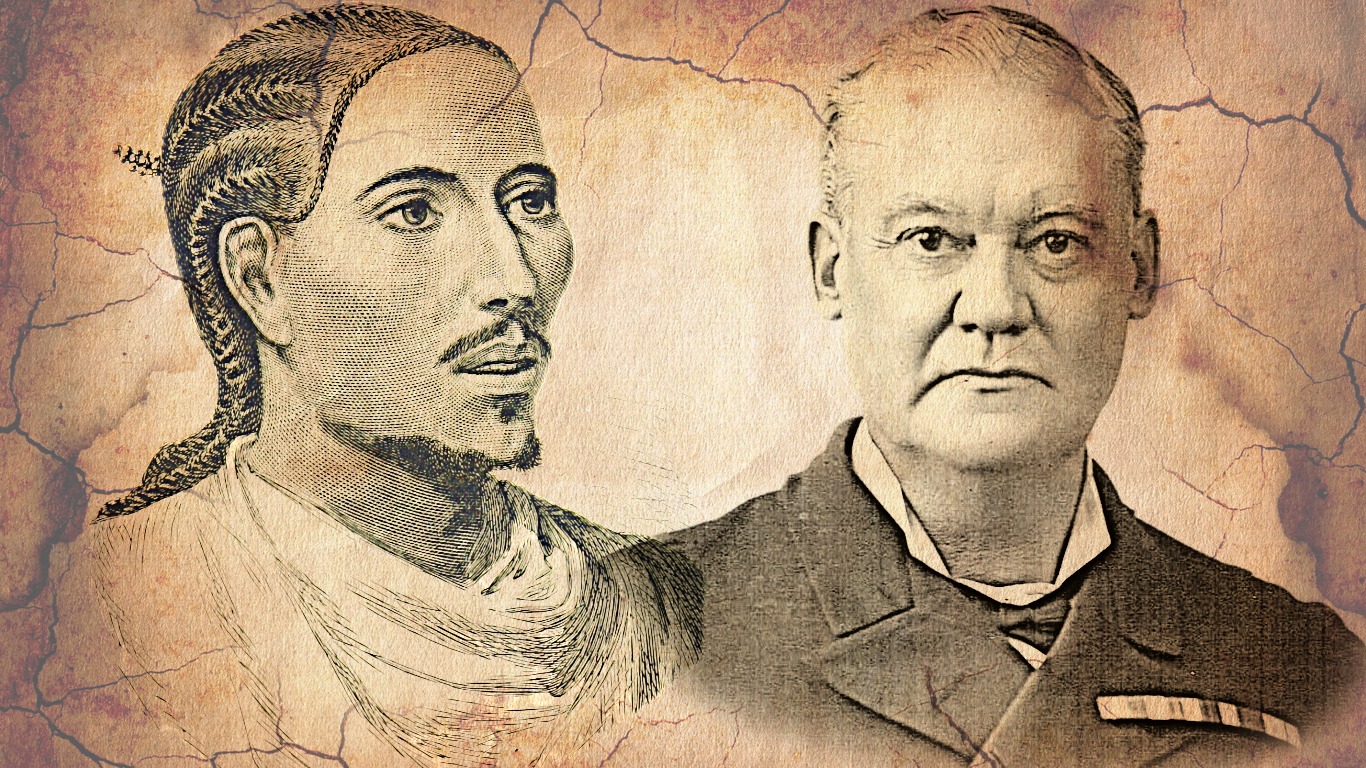 Emperor Yohannes IV of Ethiopia and Admiral William Hewett of Britain, the two principal figures of the Hewett Treaty
On the 3rd of June 1884, at the city of Adwa in northern Ethiopia, three nations signed an agreement that would reshape the political landscape of the Horn of Africa. The Hewett Treaty — also called the Treaty of Adwa — was brokered by Britain between Egypt and Ethiopia, formally ending a decade and a half of conflict over the highland territories of what is today Eritrea. The peace it promised, however, was short-lived. Within a year of its signing, its most critical provision had been rendered worthless, and the treaty would indirectly set the stage for a new and more lasting colonial intrusion into the region.
Egypt in the Highlands
Ethiopia and Egypt had been at war over the highlands of current-day Eritrea for over a decade. In 1868, Egyptian forces had occupied Bogos — a highland district north of the Mereb River in the region then called Mereb Mellash — and had steadily extended their presence southward and westward. By the 1870s, Egyptian garrisons were stationed across the region, including at Kassala and Amadid in Sudan, and Senhit in current-day Eritrea, deep in the territory that bordered the Ethiopian empire.
Emperor Yohannes IV fought back. In 1875 and 1876, his forces delivered crushing defeats to Egyptian armies at the battles of Gundet and Gura'e, inflicting massive casualties and halting any further Egyptian expansion. Though the conflict never fully resolved, Egypt's grip on the Eritrean highlands had effectively stalled.
The Mahdist Crisis
By the early 1880s, it was events far to the west — not in the highlands — that transformed the situation. The Mahdist uprising in Sudan, led by Mohammed Ahmed who proclaimed himself the Mahdi, had engulfed much of the country. Egyptian garrisons from Khartoum to the Red Sea coast were being cut off, besieged and destroyed.
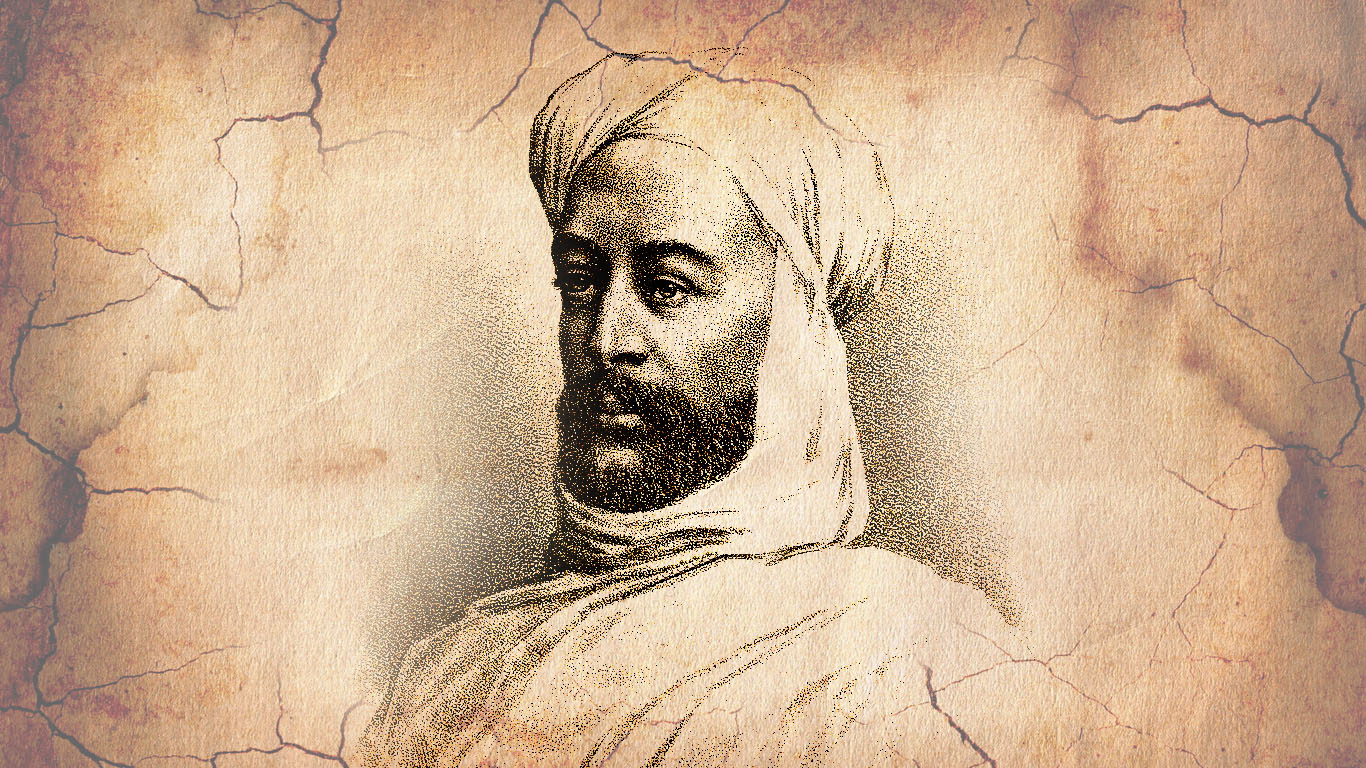 Muhammad al-Mahdi, or Muhammad Ahmad bin Abdullah, the Mahdist leader who rebelled against the Egyptian Khedivate in Sudan
Britain had occupied Egypt in 1882 and now found itself responsible for managing an unraveling strategic position across northeast Africa. The Egyptian garrisons stranded in the highland territory bordering Ethiopia — at Kassala, Amadid and Senhit — were caught between Mahdist forces pressing from the west and an Ethiopian empire that had every reason to reclaim the land beneath their feet. Britain urgently needed a way to evacuate them.
The only viable route ran through Ethiopia.
Negotiations at Asmara
Britain sent Admiral William Hewett as its envoy. Egypt sent Mason Bey. Together they traveled to Asmara — then the seat of Ras Alula Engida, Emperor Yohannes IV's viceroy and principal military commander for the northern territories — to begin negotiations.
Ras Alula was not merely the host. A cunning tactician and a fiercely loyal servant of the emperor, he was one of the treaty's principals on the Ethiopian side, and the discussions took place entirely on ground he controlled.
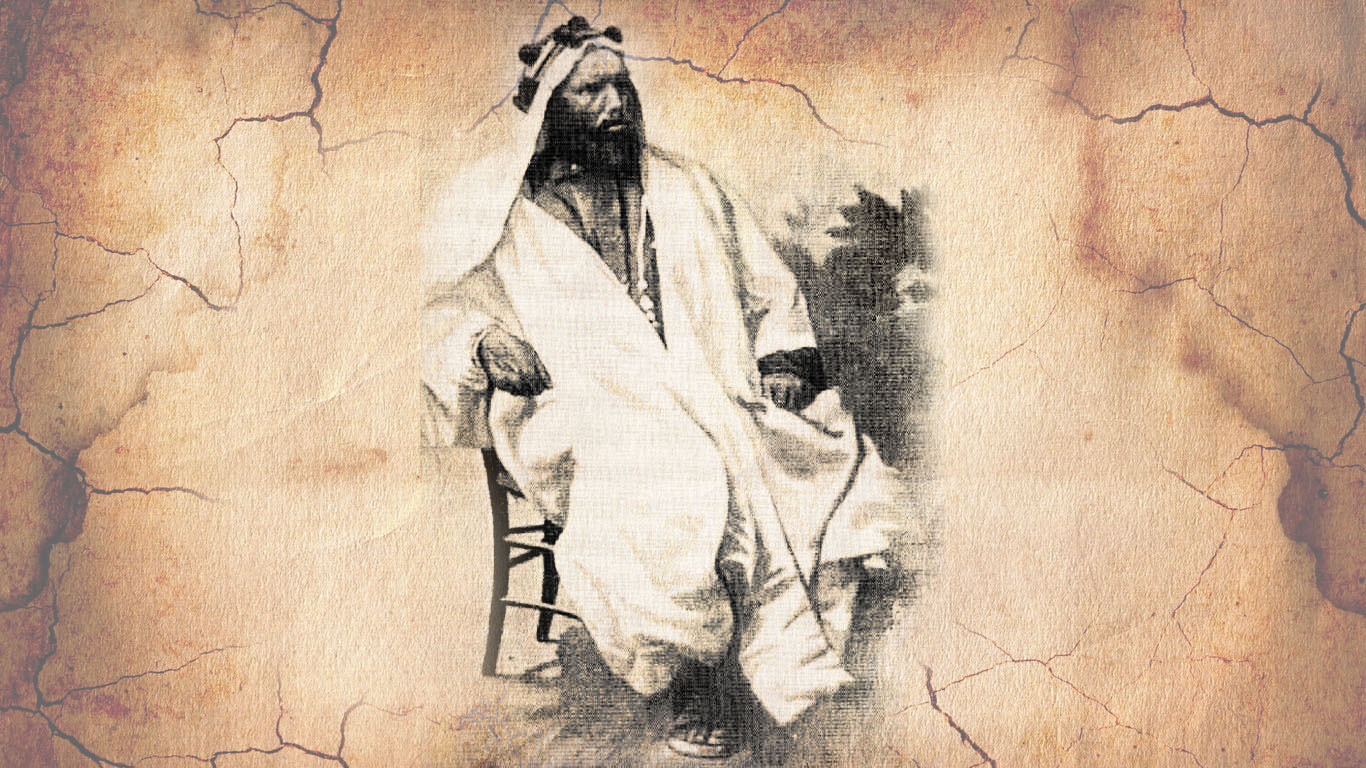 Ras Alula Engida
Once terms had been agreed in Asmara, the delegation moved south to Adwa, where Emperor Yohannes IV awaited. The emperor's demand was direct: he wanted a seaport. Without it, Ethiopia could neither trade freely nor receive arms in its own name.
Britain and Egypt could not hand over the port itself. After considerable negotiation, the emperor agreed to a compromise: Ethiopia would receive guaranteed free transit rights through Massawa for all goods, including arms and ammunition, with Britain itself pledging to protect that right. It was not the sovereignty he had sought, but it was a commitment from the most powerful empire on earth.
The Articles of the Treaty
The Hewett Treaty was composed of seven articles:
- Article I — Ethiopia shall have free transit for all goods, including arms and munitions, through the port of Massawa. Britain undertook to guarantee and protect this right.
- Article II — Egypt agreed to restore Bogos — occupied since 1868 — to Ethiopian sovereignty and control.
- Article III — Ethiopia agreed to assist in the safe passage and evacuation of Egyptian troops garrisoned at Kassala, Amadid and Senhit through Ethiopian territory to the coast.
- Article IV — Egypt agreed to permit the unobstructed passage of newly appointed Abunas (the heads of the Ethiopian Orthodox Church, traditionally ordained by the Coptic Patriarch in Alexandria) into Ethiopia.
- Article V — Egypt and Ethiopia agreed to the mutual extradition of criminals across their shared border territories.
- Article VI — Ethiopia agreed to accept British arbitration in the event of any disagreement with Egypt over the terms of the treaty.
- Article VII — General provisions for ratification and coming into force.
Appended to the treaty was a separate undertaking: Emperor Yohannes IV agreed to assist Britain in suppressing the East African slave trade — a cause Britain had made central to its diplomacy across the continent and a condition that carried real moral weight, whatever its political uses.
The Italian Occupation of Massawa
The treaty formally acknowledged Ethiopian territorial sovereignty and, on paper, addressed the core grievances that had driven years of conflict. Bogos was to be returned. The church would no longer be cut off from its Patriarch. The garrisons would be evacuated peacefully. And Ethiopia would have guaranteed access to the sea.
None of it lasted.
As Egypt withdrew from the Red Sea coast in accordance with the treaty, Italy — which had been steadily positioning itself as a presence in the region — moved to fill the vacuum. In February 1885, Italian forces formally occupied Massawa and the surrounding coastal territory. They did so with the tacit approval of Britain. The strategic calculation in London had shifted: an Italian buffer state on the Red Sea coast served British interests better than an independently accessible Ethiopian port. The guarantee Britain had made to Emperor Yohannes IV — written into the treaty's first article — was quietly set aside.
The Consequences
The Italian occupation of Massawa and further expansion into the highlands brought them into direct conflict with the Abyssinian Empire. The man who had hosted the British and Egyptian negotiators in Asmara — Ras Alula — now found himself commanding Ethiopian forces against the very power whose occupation Britain had permitted. In January 1887, his forces destroyed an Italian column at the Battle of Dogali, killing nearly 500 Italian soldiers.
But this could not reverse the strategic reality that Italy now controlled the coast. The First Italo-Ethiopian War that followed, from 1887 to 1889, consumed both nations in a conflict that had its direct origins in the Hewett Treaty's collapse.
The treaty also pulled Ethiopia into the Mahdist War. As Ethiopian forces escorted Egyptian garrisons westward as agreed under Article III, they came into armed contact with Mahdist fighters pressing in from Sudan — opening a second costly front.
Emperor Yohannes IV would fall fighting the Mahdist forces in 1889.
Italy would soon reach the central highlands and western lowlands, which would form its first colony of Eritrea. Italy continued to move southward until it came to full-blown conflict with the Ethiopia empire, eventually climaxing at the Battle of Adwa where it was defeated and its expansion was decisively halted.
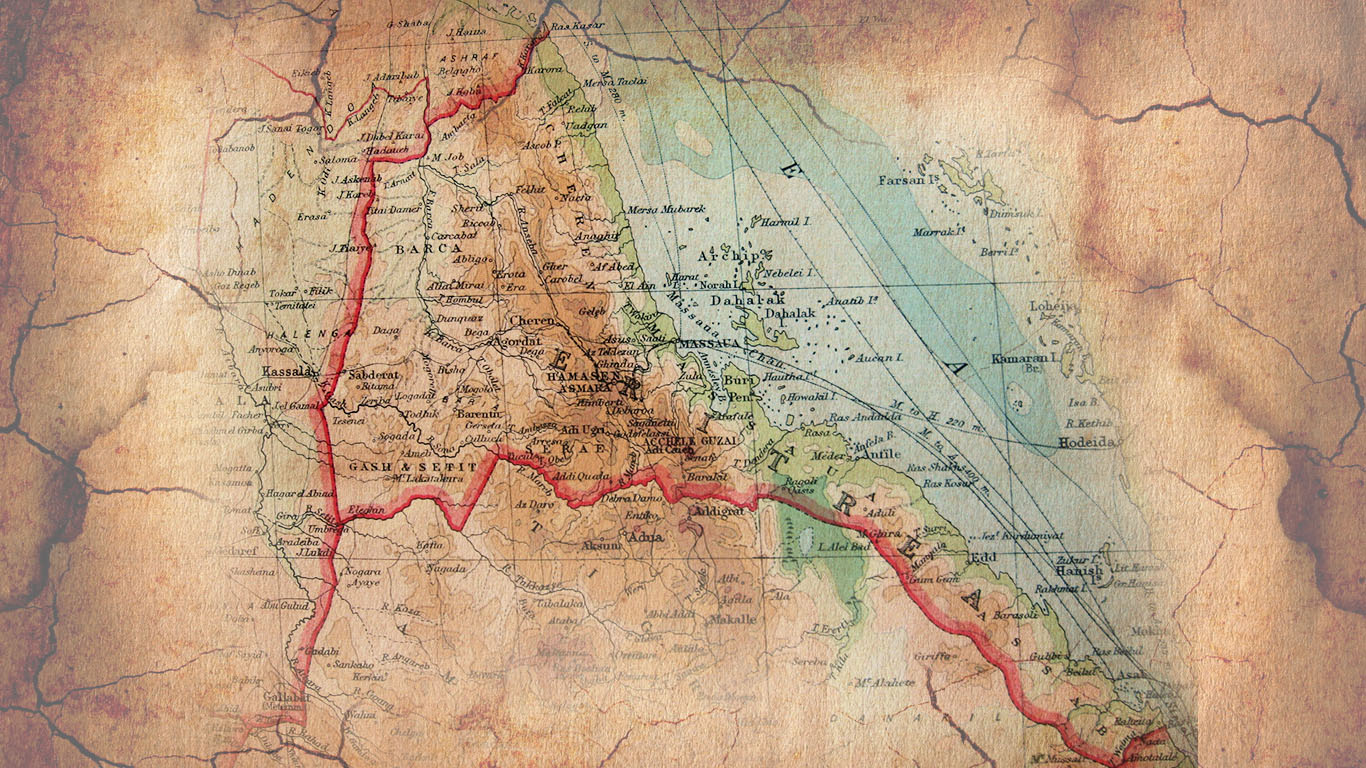 Italian map of the Colony of Eritrea